Choosing quality eyewear means understanding what actually affects your vision and comfort—and finding frames that make you feel confident every time you put them on. Here's what to evaluate when shopping for glasses, whether you're buying at a chain retailer or from a local optical boutique.
Choosing quality eyewear means understanding what actually affects your vision and comfort—and finding frames that make you feel confident every time you put them on. Here's what to evaluate when shopping for glasses, whether you're buying at a chain retailer or from a local optical boutique.
Shopping for glasses can be overwhelming. Some stores have hundreds of frames. Online retailers promise the same thing for less. How do you know what's actually worth paying for?
At Wellington Vision Care, we help people navigate these decisions daily—and we believe great eyewear does two things: helps you see the world clearly and helps you feel confident in how the world sees you. That's why finding the right glasses isn't just about optical precision (though that matters immensely). It's also about finding frames that feel like you.
Here's what to understand so you can make informed choices based on your vision needs, lifestyle, style, and budget.
Start with Your Prescription (This Matters As Much as Frames)
Before you think about frames, understand your prescription needs. This determines what lens options will work for you.
Single Vision vs. Progressive Lenses
Single vision lenses correct one field of vision (distance or reading). These are simpler to manufacture and work well in most frames unless you have a higher prescription.
Progressive lenses (no-line bifocals) correct multiple distances in one lens. These require precise measurements, larger frame heights, and professional fitting to ensure you're looking through the right zones.
Prescription Strength Affects Your Options
Mild prescriptions (under ±2.00): Most standard lenses work fine. You have the most flexibility in frame choice.
Moderate to strong prescriptions (±2.00 to ±6.00): High-index lenses (thinner, lighter materials) make a noticeable difference. Frame choice affects how thick your lenses look.
Very strong prescriptions (over ±6.00): Lens material and frame size significantly impact weight and appearance. Professional guidance helps optimize the result.
Astigmatism: Higher astigmatism (over -2.00 cylinder) benefits from precise optical center alignment—another reason professional fitting matters.
What Actually Makes Lenses "Better"
Lens quality affects how clearly you see, how comfortable your eyes feel, and how long the lenses last.
Lens Material
Standard plastic (CR-39): Clear optical quality, affordable, good scratch resistance. Thicker and heavier for strong prescriptions. At our clinics we use the higher index versions of these plastics to offer better optical quality.
Polycarbonate: Impact-resistant (good for sports, children), lighter than standard plastic, built-in UV protection. Softer material scratches more easily without coating.
High-index (1.67, 1.74): Significantly thinner and lighter for strong prescriptions. More expensive. Requires anti-reflective coating to reduce glare.
How to decide: We look at the size of the frame, visual demands of the patient and strength of the prescription to get the best visual outcome.
Lens Coatings
All of our lenses have:
Anti-reflective (AR) coating: Reduces glare from screens, headlights, and overhead lights. Makes lenses nearly invisible aesthetically. Essential for high-index and progressive lenses. Quality varies—cheap AR coatings peel or smudge easily; premium coatings last years.
Scratch-resistant coating: Hardens the lens surface. Doesn't make lenses scratch-proof, but improves durability.
UV protection: Blocks harmful ultraviolet light. Built into polycarbonate and most high-index materials.
You may elect to have:
Blue light filtering: May reduce eye strain from screens for some people. Evidence is mixed. Typically adds a slight yellow tint (high-quality versions are nearly clear).
Encanced night driving vision: Many lens companies offer filters to reduce glare improve night driving contrast
How to decide: Anti-reflective coating is the most noticeable upgrade for most people.
Frame Materials: What's the Difference?
Frame materials affect durability, comfort, weight, and adjustability. Here's what to know:
Plastic Frames
Injection-molded plastic: Most affordable option. Lightweight but limited adjustability (can't be heated and reshaped). More prone to breaking at stress points. We do not carry this.
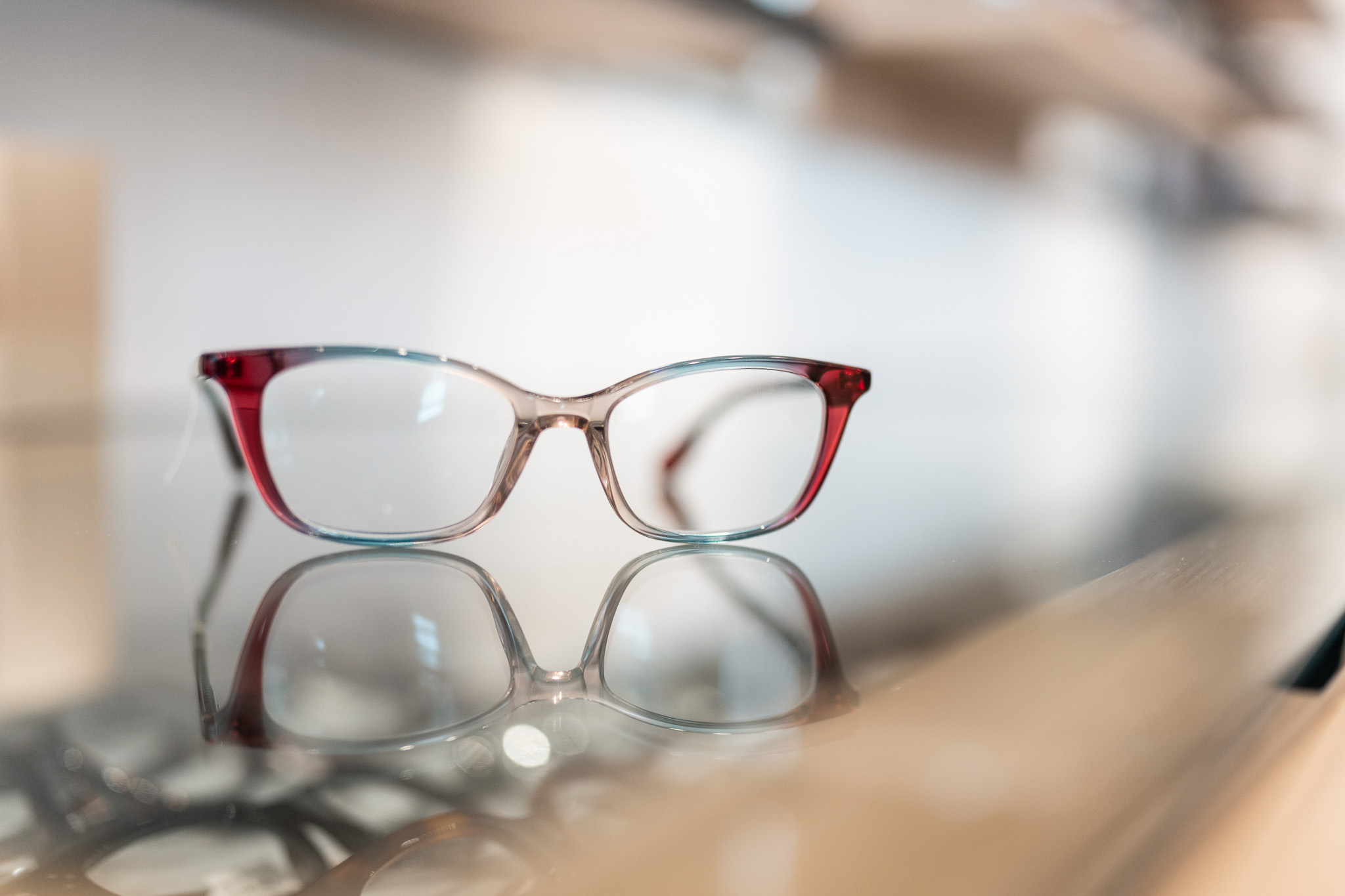
Acetate: Hand-cut from layered sheets (usually cellulose-based). Can be adjusted by heating and reshaping. Hypoallergenic for most people. Wider range of colors and patterns. More durable and adjustable than injection-molded plastic, often cored with metal.
How to tell the difference: Acetate feels warmer and smoother. Injection-molded plastic often has visible seams. Ask the retailer which type you're looking at.
Metal Frames
Stainless steel: Durable, corrosion-resistant, moderate weight, hypoallergenic. Good balance of quality and price.
Titanium: Extremely lightweight (40% lighter than steel), very strong and flexible, corrosion-resistant, hypoallergenic. More expensive. Ideal for people who find glasses uncomfortable due to weight.
Nickel alloys: Found in some budget metal frames. Can cause allergic reactions. Less durable than stainless steel or titanium.
Beyond Function: Finding Frames That Feel Like You
Here's what we believe at Wellington: your glasses are one of the first things people notice about you. They're not just a medical device—they're part of how you present yourself to the world.
That's why we talk about "inspired eyewear." Great frames should make you excited to put them on each morning, not just correct your vision.
Think about how you want to be perceived:
Do you want frames that signal creativity and confidence? Look for bold shapes, unexpected colors, or architectural designs.
Do you prefer classic professionalism? Sleek metal frames, timeless shapes, and neutral tones communicate understated sophistication.
Do you want frames that disappear? Minimalist wire frames or rimless designs keep the focus on your face, not your glasses.
Your frames communicate something before you say a word. Make sure they're saying what you want them to say.
This is why curation matters. At Wellington, we carry carefully selected collections from designers who create frames that are both optically sound and aesthetically inspiring—because you shouldn't have to choose between seeing clearly and looking great.
Look good, feel good isn't vanity. It's confidence. And confidence affects how you show up in the world.
Why Professional Fitting Actually Matters
Even perfect lenses won't work correctly if they're not positioned properly in front of your eyes.
Measurements That Affect Your Vision
Pupillary distance (PD): The distance between your pupils. If this is off by even 2-3mm, you may experience eye strain, headaches, or difficulty focusing.
Optical center height: Where the clearest part of the lens sits relative to your pupil. Critical for progressive lenses.
Vertex distance: How far the lens sits from your eye. Affects the effective power of your prescription, especially for strong prescriptions.
Online retailers usually ask you to measure your own PD or estimate from a photo. Vertex distance and tilt are not customized.
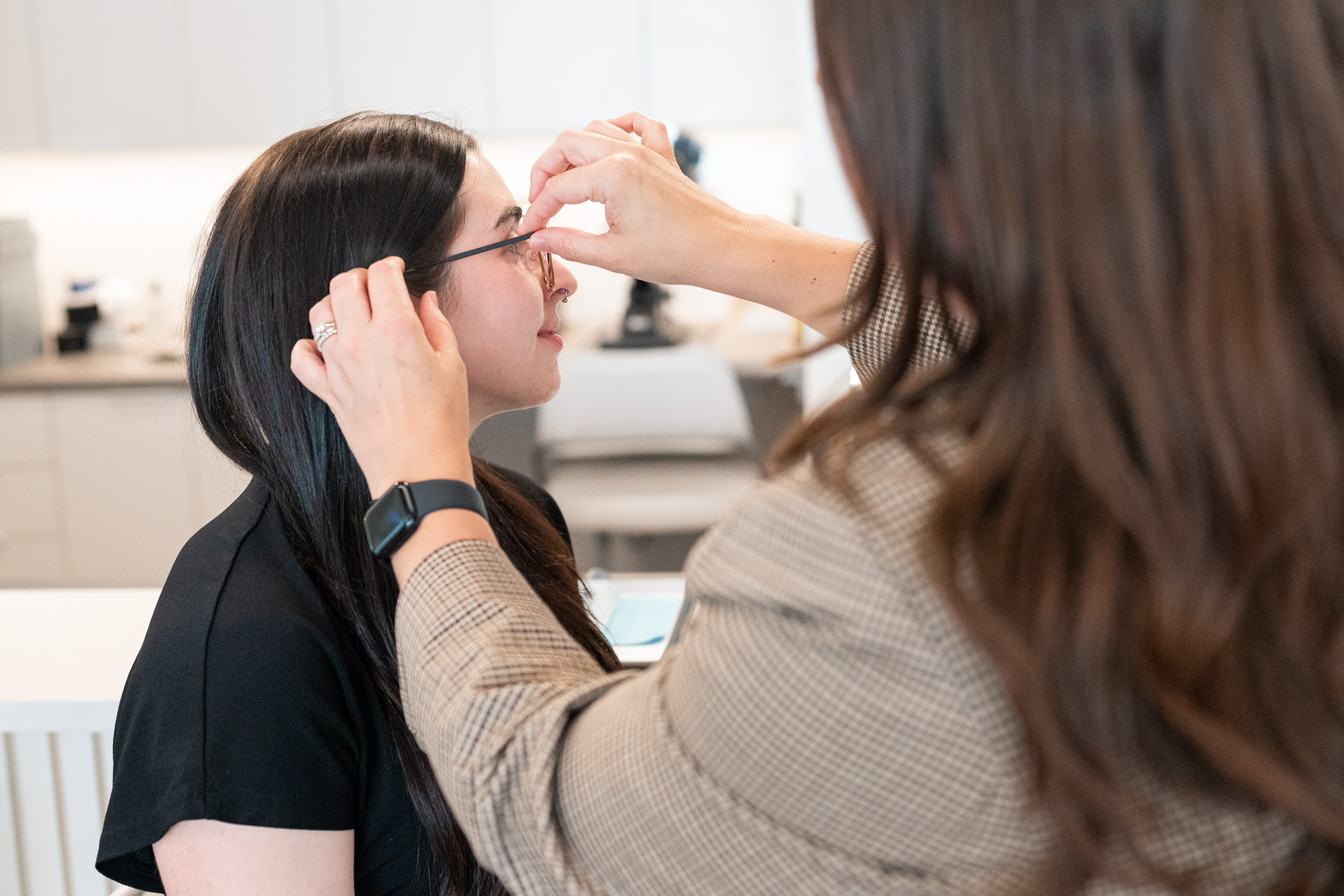
Optical retailers measure these precisely with specialized equipment and adjust frames to optimize these factors.
When fitting matters most: Always but especially, progressive lenses, strong prescriptions, high astigmatism, computer-specific glasses.
Frame Adjustments
Well-fitted frames should sit level on your face, rest comfortably on your nose without pinching or sliding, and position lenses at the correct distance and angle.
Most optical retailers (boutiques and chains) offer free adjustments for life. Online glasses? You're on your own.
When to Invest in Premium Options
Higher prices don't always mean better quality, but some situations benefit from premium options:
You'll notice the difference if:
You wear glasses full-time (8+ hours daily)
You have a complex prescription (progressives, strong Rx, high astigmatism)
You're sensitive to weight or pressure (titanium frames, high-index lenses reduce weight by 30-50%)
You work extensively with screens (quality AR coatings make a significant difference)
When mid-range options are fine:
You have a mild, stable prescription
You're getting backup glasses
You're still growing (children/teenagers with frequently changing prescriptions)
The Wellington Approach: Where Expertise Meets Style
At Wellington Vision Care, we're passionate about helping you find eyewear that works for your vision, your life, and your sense of style.
What makes us different:
We lead with "sight and style." Great eyewear serves both purposes equally. We won't prescribe frames that look amazing but don't work optically—or frames that work perfectly but make you feel self-conscious.
Comprehensive eye exams designed around your life. We assess your vision at multiple distances and discuss how you actually use your eyes daily (screen work, driving, reading, hobbies). This informs our lens recommendations.
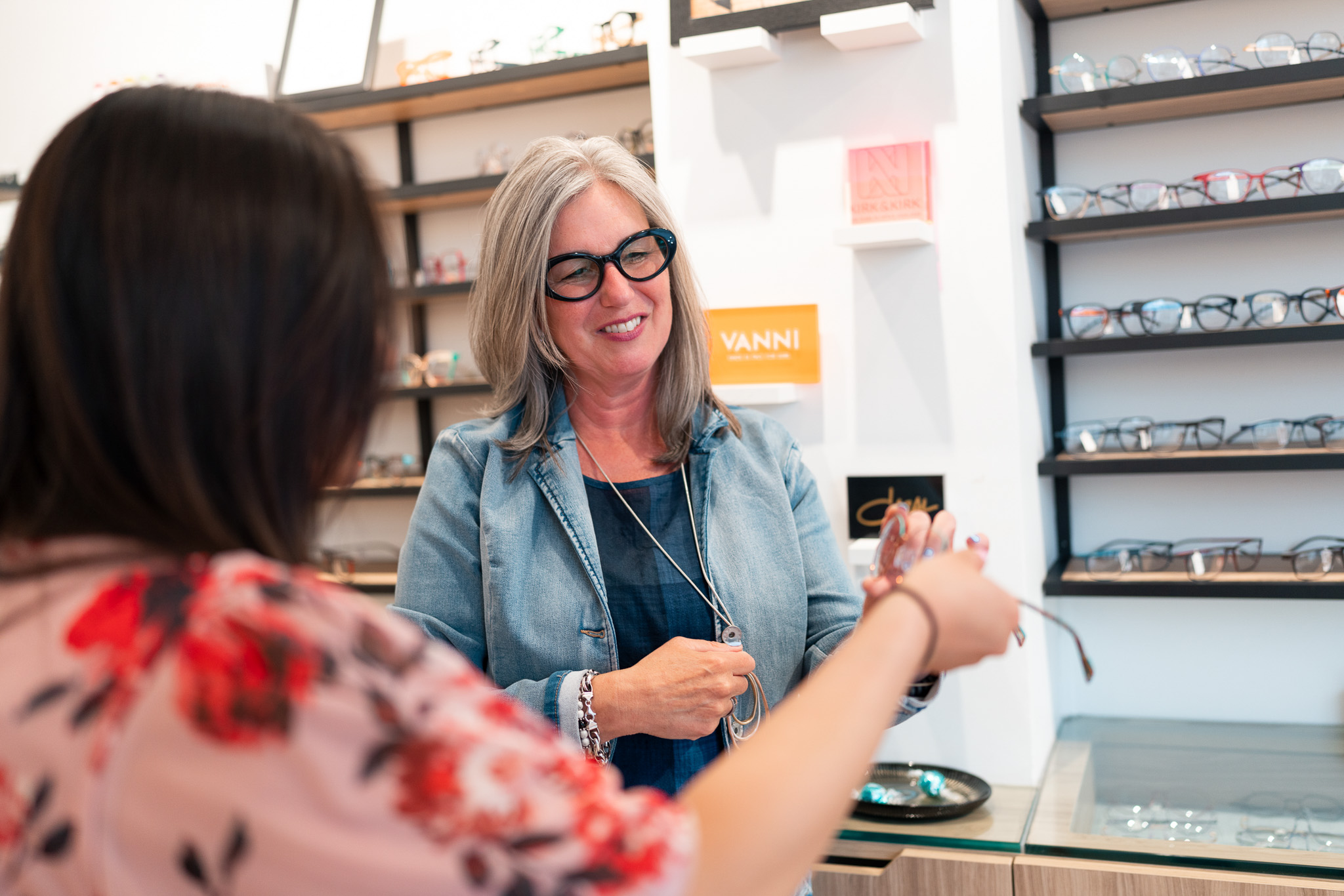
Curated designer collections. We carry brands that share our belief that eyewear should be inspiring: Krewe (vintage New Orleans style), Mr. Leight (California minimalism in Japanese titanium), Etnia Barcelona (bold artistic frames), Kirk & Kirk (British handmade geometric designs), and Maui Jim (technical excellence). Each represents a distinct design philosophy and commitment to quality. Cartier timeless luxury.
Transparent guidance. We explain what frames are made from, what lens options exist, and why certain features might benefit you specifically. No pressure—just honest information from people who genuinely love what we do.
Professional fitting by trained optical professionals. We measure your PD, vertex distance, and fitting parameters precisely. We adjust frames to ensure optimal optical performance and comfort.
A welcoming, inclusive environment. We treat our patients and colleagues with respect, compassion, and kindness. You deserve the best patient experience—and we're committed to providing it in a space where everyone feels welcome.
Ongoing support. Adjustments, cleaning, minor repairs—complimentary for as long as you own your glasses. We want you to love wearing them.
Complete glasses range: Complete glasses start at 333$ for single vision glasses, with frames that have a two year manufacturer warranty and lenses that are scratch resistant, anti reflection & unlimited adjustments
We're honest about when premium options matter and when they don't. Not everyone needs our most expensive frames—but everyone deserves glasses that work correctly, feel comfortable, and make them feel confident.
Ready to Find Eyewear That Works and Inspires?
Book a comprehensive eye exam at Wellington Vision Care. We'll assess your vision, help you understand your options, and guide you toward eyewear that balances optical precision with personal style.
Visit us at 1282-C Wellington Street West, Ottawa (wheelchair accessible).
Hours:
Monday-Friday: 10 AM - 6 PM
Saturday: 10 AM - 5 PM
Sunday: Closed
Medical Disclaimer
This article is for educational purposes only and does not replace individualized medical advice. Eyewear recommendations vary by patient. Please consult your optometrist for personalized care.



.jpg)
.jpg)
.jpg)